The European directive 2024/825, published on March 6, 2024, and applicable from September 27, 2026, reshuffles the deck for the entire beauty sector. Brands that based their positioning on generic environmental claims must revise their strategies, and this regulatory constraint influences product, packaging, and communication trends observed throughout 2024.
Directive 2024/825 and beauty claims: what changes concretely
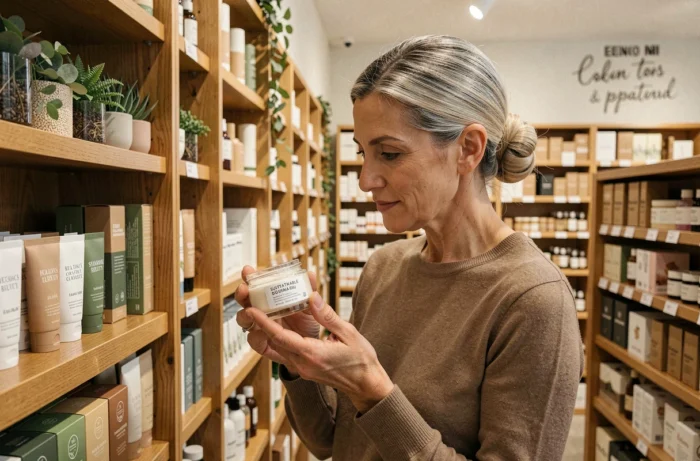
The text prohibits mentions of “ecological,” “sustainable,” or “climate neutral” when they are not supported by verifiable evidence. Self-assigned sustainability labels are banned. A brand can no longer present an entire product as responsible when only one aspect, such as recycled packaging, has an environmental improvement.
Carbon neutrality arguments based solely on compensation through carbon credits external to the product’s value chain are particularly targeted. We observe that this provision affects entire ranges of skincare and cosmetics that displayed a “compensated” carbon footprint on their packaging or influence campaigns.
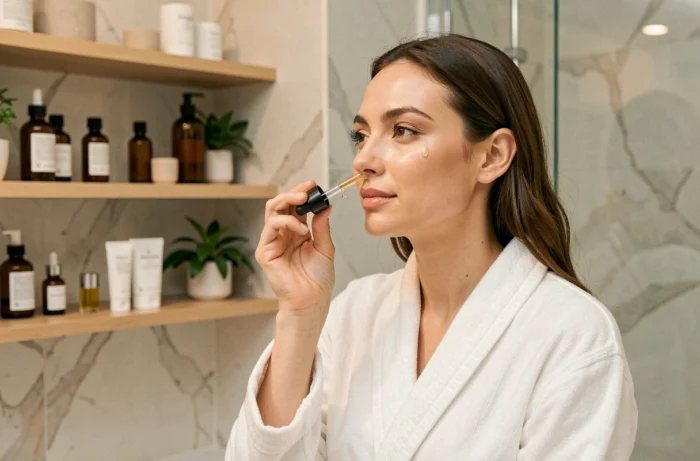
For R&D and marketing teams, the consequence is direct: each environmental claim must target a specific and documented aspect. A serum with a recycled glass bottle can mention it, but cannot claim that the product as a whole is “sustainable.”
This level of granularity requires rethinking creative briefs, product sheets, and retail arguments. Those who wish to read the news on Annuaire Beauté will find updates on these regulatory developments applied to the sector.
Beauty advertising investments in France: the segments that are changing
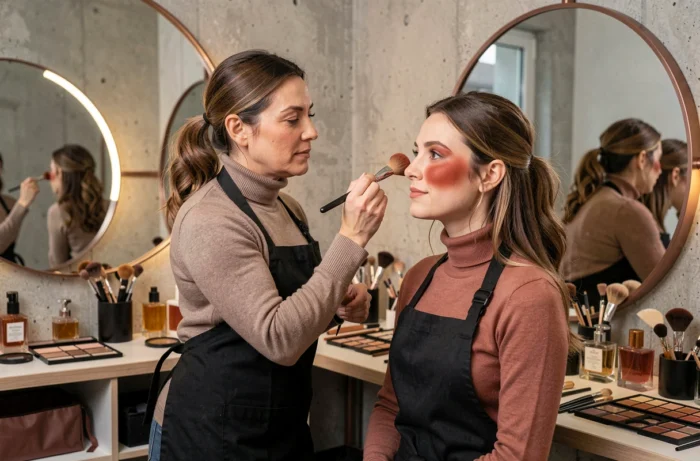
The highlight lies in the imbalance between segments. Skincare and hygiene drive growth, while makeup shows a decline. This shift reflects a movement of customers towards skin-focused routines rather than heavy makeup. Skincare brands are capturing an increasing share of media budgets, particularly in digital and on social media.
New advertisers and redistribution of channels
The rise of new advertisers, often independent brands or DNVBs (Digital Native Vertical Brands), is changing the competitive landscape. These players are heavily investing in social media and short video formats. Distribution channels are undergoing a parallel transformation: pharmacies and parapharmacies are gaining ground in the skincare segment, where selective brands once dominated.
CSR is losing ground in beauty advertising communication, an apparent paradox at the very moment when directive 2024/825 tightens the rules. The explanation lies in legal risk: several brands prefer to reduce their environmental messaging rather than expose themselves to penalties for greenwashing.
Ingredients and formulation: skin as a technical ground
The underlying trend regarding ingredients in 2024 is not limited to clean beauty in the generic sense. We observe three formulation axes that structure launches:
- Biotechnological actives (ferments, synthetic peptides) are gradually replacing raw plant extracts in premium ranges, with claims of measurable performance on the skin.
- “Skin barrier” products (ceramides, fatty acids, prebiotics) dominate the daily skincare segment. Customers are seeking repair routines rather than aggressive exfoliation.
- Hybrid textures (tinted care, serum-cream, oil-gel) blur the line between makeup and skincare. These formats respond to a demand for simplifying routines without sacrificing coverage.
Brands that document their efficacy tests with clinical protocols gain credibility with an informed clientele. Mentions of “dermatologically tested” are no longer sufficient: the market demands quantified results on panels, with observation duration and accessible methodology.
Makeup trends 2024: decline in volume, rise in technicality
The makeup segment is experiencing a decline in advertising investments, but the products that perform share a common trait: the technicality of formulation. Foundations incorporate UV filters, moisturizing actives, and adaptive pigments. “Care” makeup is no longer a marketing argument; it is a requirement of specifications.
In terms of color, natural finishes and lightweight textures dominate. Highly pigmented lipsticks are giving way to tinted lip oils and colored balms. Makeup is moving closer to a tinted skincare routine rather than a transformation of the face.
LED and at-home beauty devices
At-home LED devices continue their growth. Anti-aging and anti-blemish LED masks, popularized by social media, represent an expanding segment. Cosmetic brands are investing in this niche by offering protocols that combine specific serums and LED devices, creating a product-device ecosystem that fosters customer loyalty.
The body care market is experiencing a similar dynamic, with massage, drainage, and firming tools becoming more professional for home use.
The year 2024 has confirmed that beauty is now played out on the field of proof. Regulatory proof with directive 2024/825, efficacy proof with clinical protocols demanded by consumers, performance proof with advertising investments that reward the most technical segments. The brands that will stand out are those that embrace this requirement for documented transparency, on every claim and every product promise.