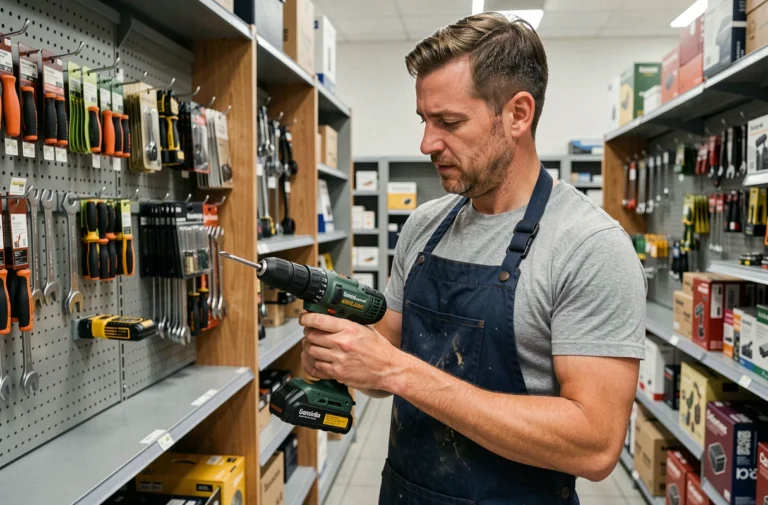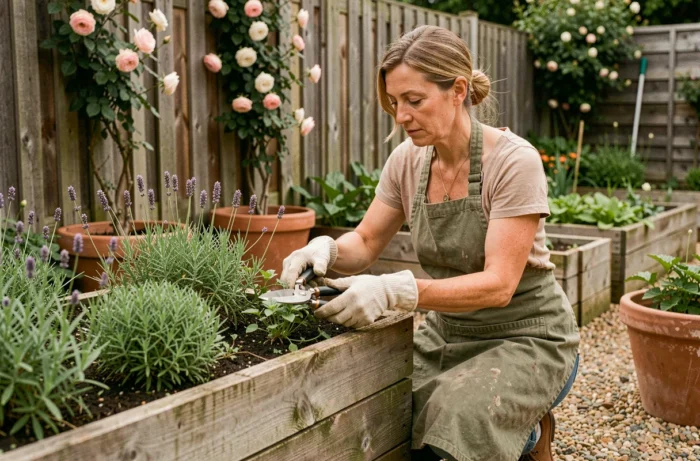
A well-functioning garden relies less on the quantity of equipment purchased than on their suitability for the land, local climate, and regulatory constraints. Choosing the best gardening equipment starts with understanding what your outdoor space requires before heading to the store.
Noise regulations and choosing powered tools for the garden
You may have noticed that one neighbor mows their lawn on Sunday morning while another refrains from doing so? It’s not a matter of politeness: the hours of use for powered tools are set by municipal or prefectural decree. There is no single national time slot for lawn mowers, hedge trimmers, or blowers.
A noise can still be subject to penalties even during a theoretically permitted time frame if it constitutes an abnormal disturbance to the neighborhood. This changes the game for equipment choice: in densely populated residential areas, a powerful gas model becomes as much a legal risk as it is a nuisance.
Battery-powered electric mowers and hedge trimmers generate significantly lower noise levels than gas models. Robotic mowers go even further: they operate at such a low volume that they can function without causing disturbance, even in the early evening. For a modest-sized garden in an urban setting, a battery-powered electric tool offers the best regulatory flexibility.
Before investing, check your municipality’s decree. It is usually available on the town hall’s website or can be obtained with a simple call to the urban planning department. This reflex will help you avoid an unsuitable purchase.
To compare the available ranges, the equipment offered by Le Jardinier Décorateur covers both powered tools and outdoor landscaping accessories.
Water management in the garden: equipment adapted to drought restrictions
Automatic irrigation programmed for a green lawn year-round is a model that is declining. During periods of drought, prefectures activate restrictions according to four levels: vigilance, alert, heightened alert, and crisis. At each level, the rules become stricter, and irrigation of green spaces may be limited or completely prohibited depending on the department.
The official VigiEau platform allows you to check in real-time the restrictions applicable to your municipality. It is a free tool to consult before installing an irrigation system.
Equipment that reduces dependence on drinking water
Rather than a traditional underground irrigation system connected to the network, several solutions limit consumption while keeping plants healthy:
- The rainwater collector, installed at the downspout, provides a reserve that can be used even during restrictions on drinking water. Its capacity varies depending on the available roof area.
- Drip irrigation delivers water directly to the base of the plants, with no loss due to evaporation. It consumes a fraction of what a traditional oscillating sprinkler uses.
- Mulching (wood chips, straw, bark) retains soil moisture and reduces the frequency of watering. It is a passive, low-cost, and durable solution.
- Drought-resistant plants (lavender, ornamental grasses, Mediterranean plants) structurally reduce water needs.
Combining a collector, drip irrigation, and mulching makes a garden viable even under heightened alert. It is a moderate initial investment that prevents your plants from wilting every summer.
Materials and structures for sustainable outdoor landscaping
The choice of materials for garden structures (pergolas, borders, planters, terraces) determines both the aesthetics and the lifespan of the landscaping. Wood remains the most commonly used material for outdoor spaces, but not all woods are equal when it comes to weather resistance.
Wood, composite, or metal: choose based on maintenance
Untreated softwood (pine, spruce) grays in a few seasons and can warp without regular maintenance. Class 4 woods (chestnut, black locust, exotic woods) naturally resist moisture, but their cost is higher. Wood-polymer composite requires no staining or sanding, making it a relevant choice for a terrace or planters if you do not wish to spend time on maintenance.
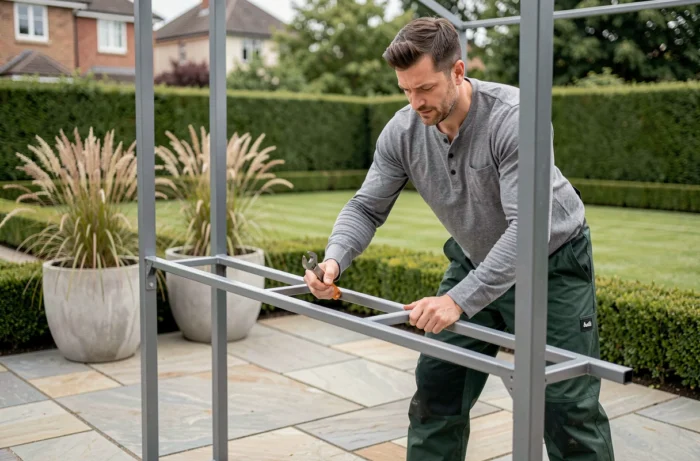
Metal (corten steel, powder-coated aluminum) is suitable for structures like pergolas or flowerbed borders. Corten steel develops a protective rust patina that integrates well into a modern or natural garden style. Aluminum, being lighter, resists corrosion without treatment.
Outdoor lighting: solar LED and low voltage
Lighting transforms the use of a garden in the evening. Solar LED bollards recharge during the day and automatically light up at dusk, without wiring or consumption from the grid. For areas that require more powerful lighting (main path, entrance), a low-voltage LED circuit offers reliability and low consumption.
Opt for downward-facing fixtures to limit light pollution, an increasing concern in suburban areas. Models with motion detectors combine security and energy savings.
Biodiversity and design: finding a balance in the garden
A highly structured garden, with neatly trimmed hedges and a closely mown lawn, offers few resources for pollinating insects and birds. Integrating less maintained areas (a strip of wildflowers, a pile of dead wood, a country hedge) promotes biodiversity without sacrificing overall aesthetics.
Large pots and planters can create green spots on a terrace while hosting nectar-rich plants. A few lavenders, thyme, or sage in stylish containers are enough to attract pollinators.
The most useful equipment for biodiversity is often the cheapest: a simple birdhouse, a water dish, or a patch of unmowed ground. The best-equipped garden is not the one that accumulates the most accessories, but the one where each element serves a clear purpose, whether aesthetic, practical, or ecological.