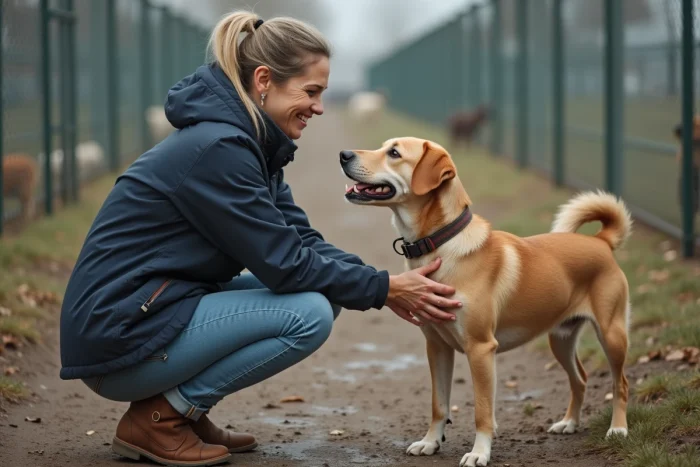
In France, the law has recognized animals as “living beings endowed with sensitivity” since 2015, but offenses against them remain largely underreported and poorly sanctioned. Some practices, still legal, evade controls or benefit from exemptions.
In light of this observation, every individual and collective action changes the reality on the ground: reporting abuse, making consumption choices, getting involved in campaigns, or supporting specialized organizations. Each initiative contributes to evolving the law and mentalities, sometimes faster than the legislation itself.
Why the defense of animal rights has become an essential societal issue
French society no longer turns a blind eye to animal abuse. Since the law recognized the animal as a “sensitive being,” a threshold has been crossed: it is now impossible to treat dogs, cats, or farm animals as mere property. Animal protection has established itself in public debate. Domestic animals are now protected by strict rules, mandatory identification, and welfare requirements, while the fate of farm animals and wild species is closely scrutinized regarding breeding, transport, and slaughter.
Our lifestyles have a direct impact on millions of animals, whether they share our homes or live freely. Defending and protecting these living beings also means questioning how we produce, consume, manage natural spaces, and the place we leave for biodiversity. French law punishes acts of cruelty against animals. The heavy penalties reflect a real awareness, but vigilance is constant: crimes against protected species, trafficking, habitat destruction, abandonment, and disregard for their fundamental freedoms.
Animal welfare is based on the “five fundamental freedoms” defined by the World Organisation for Animal Health, now integrated into national policies and international conventions. This evolution of the law responds to a strong expectation: citizens want to know how to act concretely, report, inform themselves, or consume differently. To delve deeper into these issues and find levers for action, you can learn more about AlmAnimal.
Behind every advancement is a shared responsibility: every gesture counts, from choosing a product to raising awareness among the youngest. Animals and humans live on the same planet, and justice has no room for indifference.
What concrete actions and commitments can be adopted to protect animals on a daily basis?
Protecting animals starts with acting on a personal level, in everyday life. Adopting an animal from a shelter is giving a new start to an abandoned being while alleviating the pressure on often overwhelmed facilities. Those who become foster families also provide a concrete and humane solution for animals in distress.
Our consumer choices also weigh heavily. Opting for Cruelty Free labeled cosmetics ensures that no animal has been used as a test subject. Choosing clothing without fur or animal leather means rejecting suffering in the name of fashion. Alternatives are multiplying, allowing for a blend of style and respect for animal life. In terms of food, prioritizing products with organic or free-range labels signifies a commitment to supporting animal welfare right down to the plate.
Support for shelters and associations takes various forms: volunteering, donations, or participating in awareness campaigns. Reporting animal abuse to authorities or through specialized platforms is a concrete action. Educating and informing those around you, both adults and children, about the importance of respect for all animals, domestic or wild, is equally crucial.
Here are some daily actions to adopt to promote animal protection:
- Prefer adoption over purchasing pets
- Refuse shows that exploit animals: circuses, dolphinariums
- Support the protection of feral cats by participating in sterilization campaigns
- Choose your food, textile, and cosmetic products wisely
- Become a volunteer or foster family with an association
Every initiative, no matter how modest, contributes to transforming the daily lives of animals. To find advice, resources, and useful tools, AlmAnimal offers support to all those who wish to get involved.

Associations, laws, and mobilizations: how your involvement can truly make a difference
In France, animal protection relies on a solid legal framework and the commitment of numerous associations. Since the law recognizes the animal as a sensitive being, animal abuse is subject to real penalties, ranging from fines to imprisonment. The European Convention for the Protection of Pet Animals and the national plan for animal welfare govern the reception, identification, and respect for the needs of domestic animals.
Animal protection associations are key players: they take in abandoned animals, conduct awareness-raising actions, and advocate for animals from laboratories, as Graal does for research dogs. Others, such as Terre d’abeilles or the LPO, focus on the preservation of pollinators and birds. Their actions often align with public institutions, such as the French Office for Biodiversity, which is responsible for investigating trafficking and harm to wildlife.
Joining an association, participating in demonstrations, supporting investigations into breeding or slaughter, contributes to advancing the animal cause. Agents from the DDecPP and DAAF monitor animal confinement conditions, while the ENSV and INFOMA train those who ensure compliance with regulations. Thanks to citizen mobilization, relayed by associations, animal welfare gains visibility and strength.
To amplify your impact, here are some concrete avenues to explore:
- Support local or national associations
- Report any suspicious situation to the French Office for Biodiversity or the relevant authorities
- Participate in campaigns against animal abuse and for the defense of domestic and wild species
Acting for animals means embedding your commitment in the living fabric of society. This fight, far from being peripheral, shapes the world we will leave behind.