A poorly insulated home can lose up to 30% of its heat through the roof, and nearly 25% through the walls. Thermal regulations, although strengthened every decade, still leave notable disparities depending on the age of the building or the region.
For a long time, modern insulation techniques seemed reserved for new constructions. That time is over. Today, high-performance materials and financial aids finally allow for improvements in older buildings. However, a wrong choice, a poorly managed project, and all efforts can evaporate into unnecessary expenses.
Understanding the different insulation solutions: what choices for a high-performance habitat?
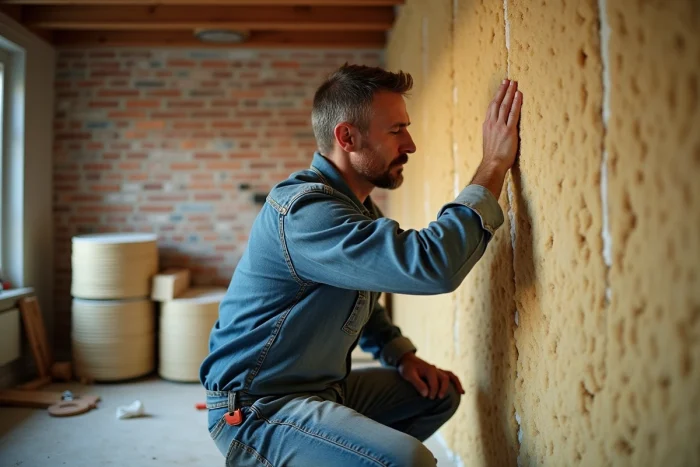
To make your home truly comfortable and economical, you must first precisely identify the areas to be treated. Heat losses can occur everywhere: walls, floors, attics, basements, roofs, but also through the infamous thermal bridges, those often invisible flaws that disrupt the continuity of the insulation. In light of these weaknesses, two main strategies stand out: interior insulation (ITI) on one side, and external thermal insulation (ITE) on the other.
ITE, highly sought after during comprehensive renovations, wraps the house in a second skin, limits the loss of living space, and effectively addresses thermal bridges. ITI, on the other hand, can sometimes be simpler to implement, especially for targeted interventions or in co-ownership, but it does not always allow for treatment of the entire structure.
The choice of insulating material also plays a decisive role. Each situation calls for its solution, whether it be glass wool, rock wool, cellulose wadding, polystyrene, polyurethane, wood fiber, hemp wool, sheep wool, or cork. Not all offer the same resistance to moisture, ecological impact, or ease of installation. One piece of advice: rely on ACERMI certified products, their reliability is well established.
But ensuring air tightness and sealing of joinery is also essential. Switching from single to double glazing, or even triple glazing depending on exposure, can significantly reduce losses. That said, without appropriate ventilation, whether single or double flow, thermal comfort can quickly give way to stale air and humidity problems.
To go further, obtain precise advice and technical opinions, Technique Habitat offers a wealth of concrete information, useful for every step of the renovation.
What financial aids are available for your work and how to make the most of them?
Engaging in insulation or energy renovation work often involves significant expenditure. Fortunately, several schemes facilitate access to these transformations. The flagship aid remains MaPrimeRénov’, managed by the State: it is aimed at owner-occupiers, landlords, or co-ownerships, with an amount adjusted based on income and the nature of the work. In addition, there is the zero-interest eco-loan, which allows borrowing up to 50,000 euros without interest for a bundle of work. Depending on the regions, local incentives sometimes complement this support.
Here is an overview of the available schemes to lighten the cost of your projects:
- MaPrimeRénov’: direct subsidy accessible to all owners, subject to certain criteria.
- Zero-interest eco-loan: repayable advance without interest to finance thermal insulation or energy renovation work.
- Local subsidies: some local authorities offer bonuses or tax reductions based on your situation and the location of the property.
To make the most of these aids, it is essential to choose a RGE (Recognized Environmental Guarantee) certified professional and to submit your requests before starting the work. Often, a prior energy audit guides you towards the best solutions and allows you to maximize the amount of subsidies. Personalized support simplifies the preparation of files and the validation of quotes.
The accumulation of aids is possible, provided that the specific conditions of each scheme are respected. For a complete and up-to-date overview of financing options, Technique Habitat provides all its expertise and resources to guide individuals.

Common mistakes, optimizing the DPE, and the importance of tailored support
In energy renovation, certain pitfalls occur too often. Underestimating the complexity of the energy performance diagnosis (DPE), neglecting thermal bridges, or forgetting ventilation: these mistakes are costly in terms of comfort and savings. Choosing an ill-suited insulator, ignoring air permeability or thermal resistance, rushing the project without planning: all these missteps result in disappointing outcomes, sometimes even an unchanged bill.
Improving your DPE is not something that can be improvised. It requires a precise analysis of energy consumption, detection of weak points, verification of condensation or humidity risks, and above all, adjustment of solutions to the actual configuration of your home. The success of an energy renovation depends on the ability to adapt each intervention to the context of the building.
To avoid the main mistakes, keep these fundamentals in mind:
- Opt for a personalized energy audit to target relevant improvement areas.
- Avoid partial insulation that overlooks junctions between walls, floors, and windows.
- Ensure indoor air quality through effective ventilation, especially after enhanced insulation.
Benefiting from tailored support ensures coherence between ambition, means, and results. Energy renovation hinges on the precision of the diagnosis, clarity of advice, and mastery of the project. Ultimately, every detail weighs heavily in the transformation of your home.
A well-insulated habitat is a home that breathes serenity in every season. The next step? Dare to take the plunge, armed with the right choices and the right team.