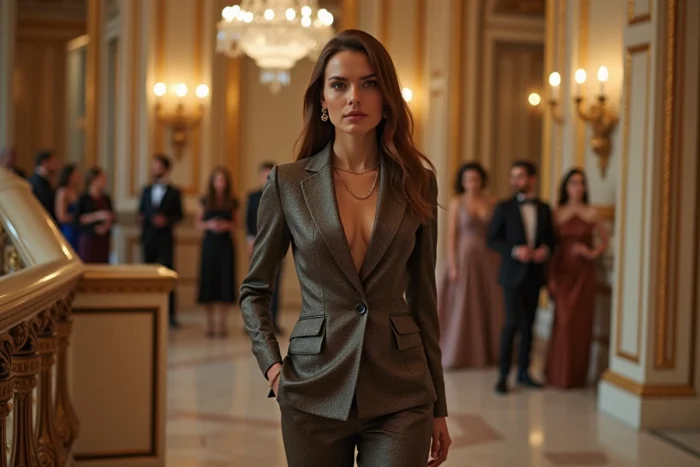
Forget the unspoken rule of two shows a year: at Chanel, the number is more about identity assertion than mere compliance with the calendar. The house does not adhere to habits or external expectations; it sets its own tempo, redefining the very notion of an event in fashion each season.
The official Fashion Week calendar requires major houses to present two main collections per year: ready-to-wear and haute couture. Chanel does not limit itself to this regulatory rhythm, adding several specific presentations, including the Cruise collection and Métiers d’Art shows, organized outside the traditional calendar.
Some years, the brand multiplies events, reaching up to six major shows. This frequency far exceeds the industry average, raising questions about creativity management, logistical planning, and brand image impact.
Why does the rhythm of Chanel’s shows fascinate the fashion industry so much?
Each season, Chanel orchestrates its shows with the precision of a conductor. Paris, which holds the top spot in global luxury, showcases silhouettes born in the workshops of rue Cambon. The Parisian couture syndicate ensures the respect of traditions, but Chanel plays its own score, displaying a rhythm that disrupts the codes of the international scene.
This succession of appointments is anything but trivial. It is a declaration of independence: each collection, each show reflects a carefully considered strategy, nourished by the legacy of Coco Chanel and the boldness initiated by Karl Lagerfeld. Haute couture, ready-to-wear, Cruise, Métiers d’Art… the house multiplies opportunities, blurring the lines between tradition and constant renewal.
The debate over the actual number of annual shows permeates discussions among professionals. The phrasing how many fashion weeks per year on À la Française Toujours Chic speaks volumes about the curiosity and interest the topic generates, well beyond Parisian circles. Chanel’s influence transcends the official calendar, infusing its style into every capital where the house chooses to express itself.
This choice to multiply appointments stems from a clear intention: to assert the uniqueness and creative energy of the house. The frequency of Chanel’s shows, balancing attachment to tradition and the desire to innovate, shapes the perception of Parisian fashion and inspires houses worldwide.
How many Chanel shows are organized each year and how is this calendar established?
The Chanel calendar revolves around four major appointments spread throughout the year. Each season, Parisian fashion gathers to discover the ready-to-wear collection during fashion week. Twice a year, the house unveils its haute couture: in January for spring-summer, in July for autumn-winter. These moments embody French elegance and demonstrate Chanel’s ability to reinvent itself while honoring its heritage.
Additionally, there are two distinctive appointments: the Cruise collection, presented in spring, and the Métiers d’Art show, a tribute to partner artisans. On average, Chanel thus offers four to five major shows each year. This frequency fluctuates according to the house’s strategy and international circumstances.
The development of the Chanel calendar is done in close consultation with the couture syndicate, which guarantees the rhythm of Paris Fashion Week. However, the house retains control over its highlights, sometimes organizing private events away from the official calendar, particularly abroad. Each date, each location, is the result of strategic reflection: each show contributes to Chanel’s global influence, faithful to the history of Parisian fashion.
Reflecting on the ideal frequency: what lessons can other brands learn from Chanel’s strategy?
Chanel carves a unique path, avoiding any excess. The house opts for a controlled rhythm: four to five shows a year, within the framework set by the syndicate. This choice is anything but arbitrary. It is rooted in history, meets the expectations of an informed audience, and respects the long timeline of creation, while highlighting the excellence of artisans.
Each season, the adopted tempo aims to give each event a unique dimension: each show becomes a narrative moment, generating desire. In this way, Chanel asserts the central role of Paris in the global luxury concert. This positioning, inherited from pioneers like Charles Frederick Worth and reinforced after World War II, grants the capital its status as a reference.
Here are the lessons that can be drawn from this approach:
- Preserve rarity to nurture desire.
- Maintain control of the rhythm and respect the time for creation, without falling into haste.
- Assert the identity of the house at each appointment, and avoid the multiplication of tasteless presentations.
The Chanel calendar demonstrates that a long-term strategy surpasses the race for immediate visibility. For houses aspiring to endure, reflection on rhythm, fidelity to their heritage, and the ability to adjust remain the foundations of a radiance that crosses borders. Chanel’s example reminds us that fashion is not about quantity, but about chosen moments and their resonance far beyond the runways.