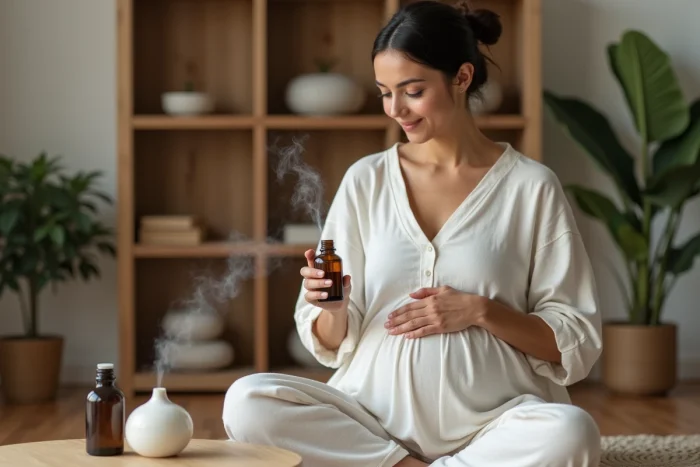
During pregnancy, essential oils pose a simple problem: their active molecules penetrate the skin, enter the bloodstream, and can cross the placental barrier. What makes them effective in aromatherapy can also render them potentially dangerous for the developing fetus. Understanding this mechanism allows for a distinction between justified caution and irrational fear.
Accidental exposure to essential oils during pregnancy: when to consult
Have you inhaled a diffuser at a friend’s house or applied a cream containing essential oil before knowing it was not recommended? This scenario is common and generates a lot of anxiety.
The first thing to assess is the route of exposure. A brief and occasional inhalation poses less risk than repeated topical application. A massage with an oil containing ketones, for example, leads to a more direct entry into the bloodstream than a few minutes of atmospheric diffusion.
Certain signs should prompt you to contact your doctor or midwife without delay:
- Unusual contractions or abdominal pain occurring within hours of exposure
- Sudden nausea, dizziness, or respiratory spasms that do not match your usual pregnancy symptoms
- A skin reaction (redness, burning, itching) at the application site, which may indicate significant transdermal absorption
In the absence of these symptoms, a single and brief exposure does not warrant panic. Mention it at your next follow-up appointment. The healthcare professional will evaluate the type of essential oil involved and the duration of exposure to adjust their recommendations.
The topic of essential oils and pregnant women deserves a case-by-case approach rather than a blanket ban without nuance.
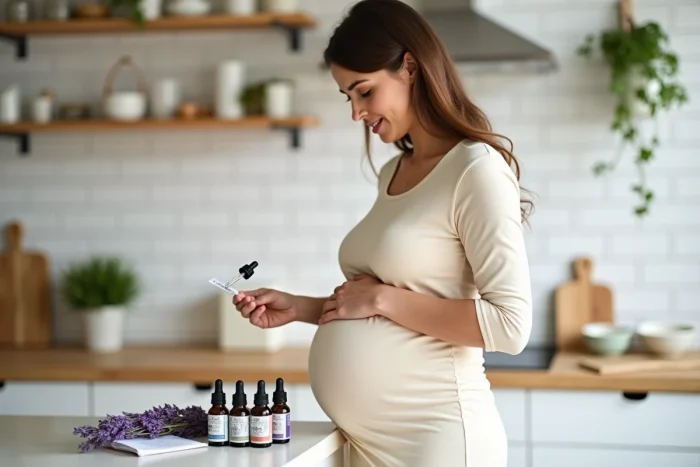
Organic cosmetics and essential oils: a common trap for pregnant women
A bottle labeled “organic” or “natural” does not guarantee its compatibility with pregnancy. This shortcut is one of the most common traps in aromatherapy.
An organic cosmetic may contain powerful essential oils, sometimes in significant concentrations. Organic labels certify a method of cultivation and processing of ingredients. They do not take into account the specific risk profile for pregnant women.
Take the example of a body cream with clary sage, certified organic. Clary sage contains estrogen-like compounds that can interfere with the hormonal balance of pregnancy. The organic label does not change this pharmacological property.
Read the INCI list before any purchase
The INCI list is the list of ingredients printed on the packaging. Essential oils are usually listed under their Latin name. “Salvia sclarea oil” refers to clary sage essential oil, “Mentha piperita oil” refers to peppermint oil.
Always check for the presence of the word “oil” associated with a plant name in the ingredient list. When in doubt, seek advice from your pharmacist rather than the store clerk at the organic shop.
Essential oils by trimester of pregnancy: precautions that evolve
Caution is not the same in the first month as it is in the eighth. The first trimester concentrates the most serious risks.
During the first three months, no essential oil should be used, regardless of the method of administration. This is the period of organ formation for the fetus (organogenesis). The active molecules in essential oils, particularly ketones, can cause nerve or respiratory spasms and increase the risk of miscarriage.
After the first trimester: a strict framework, not a general authorization
From the fourth month onwards, certain essential oils are tolerated under specific conditions. Atmospheric diffusion in a ventilated room, for a limited duration, remains the least risky mode of use.
Topical application, if considered, requires significant dilution in a vegetable oil. Oral use remains discouraged throughout pregnancy, except with explicit medical prescription.
- True lavender (Lavandula angustifolia) is one of the most tolerated essential oils after the first trimester, in diffusion or diluted application
- Ravintsara is sometimes mentioned for its antiviral properties, but its use should remain occasional and validated by a professional
- Peppermint, camphor rosemary, sage, and cedar are among the essential oils that remain prohibited throughout pregnancy

Passive diffusion in spas and salons: an underestimated risk
Competitors mainly talk about voluntary use. However, involuntary exposure deserves equal attention.
Spas, treatment rooms, and some hair salons use the diffusion of essential oils to create an ambiance. The ambient air can expose a pregnant woman to active molecules without her being aware.
The concentration in the air depends on the type of diffuser, the size of the room, and the duration of exposure. An ultrasonic diffuser in a small enclosed space creates a concentration much higher than that of a scented stick in a reception area.
Before booking a treatment at a spa during your pregnancy, ask about the type of products being diffused in the space. If the establishment cannot provide a clear answer, prefer an environment that you can control.
Breastfeeding and postpartum: vigilance does not stop at childbirth
Essential oils also pass into breast milk. The precautions of the third trimester therefore apply throughout the breastfeeding period. The idea that one can freely resume aromatherapy right after childbirth is a common mistake.
During breastfeeding, diffusion remains the safest mode of use, provided it takes place in a room where the infant does not stay permanently.
The return to full use of essential oils occurs after weaning, or upon medical advice if you are partially breastfeeding. Pregnancy and postpartum form a single period of vigilance in aromatherapy, not two separate chapters.