
The admission rate to certain applied arts schools does not exceed 15%. Each application is examined according to different criteria from one institution to another, sometimes even from one year to the next. Talented candidates regularly fail due to a poorly targeted portfolio or a lack of understanding of the interview process.
The process is not limited to simply presenting works: the jury expects a structured artistic approach, reasoned choices, and coherence in the journey. The specific selection criteria are rarely transparent, making preparation essential to maximize one’s chances.
Understanding the admission process to applied arts schools: key steps and expectations
Entering an applied arts school means facing a series of obstacles where every detail counts. Right from the start, the application file stands out as the first step. It is impossible to rely on quantity or the submission of disparate works: it is about assembling a well-constructed artistic portfolio, where each piece has its place, tells a story of evolution, and shapes an identity. The juries do not just judge technique. What they seek is uniqueness, maturity, and the reflection that shines through your choices. Whether aiming for Paris, Strasbourg, Bordeaux, or a more discreet city, this constructed sense of approach makes all the difference, far from mere plastic fireworks.
Those who have followed a preparatory art course or a school art training are better at mastering the codes. The MANAA, for example, refines artistic culture and the ability to support one’s argument. On Parcoursup, with the multiplication of wishes for art design schools, competition intensifies. Schools aim to identify profiles capable of giving meaning to their project, but also of expressing a clear orientation towards applied arts.
The interview is not a formality: it concentrates attention, crystallizes so many expectations. This is where the jury evaluates a candidate’s ability to defend their journey, to expose their motivations, and to justify their choice of institution. To gain a precise understanding of the expectations, the essentials to know about the ESMA arts school offers a valuable overview of the steps, requirements, and level of preparation to aim for in a reference of applied arts institutes.
What are the secrets of an artistic portfolio that captures the jury’s attention?
A portfolio is not improvised. It is not about stacking drawings, but about building your artistic identity card. This file must reflect your progression, weave a common thread, and reveal your perspective. The form matters: an airy and clear layout facilitates reading and focuses attention on your essential works.
For this portfolio to gain value, it must show the coherence of your approach and the variety of your practice. Here are some concrete examples of works that juries appreciate finding in a serious application:
- Observation drawing, faithful and lively
- Quick sketches that capture the immediacy of the gaze
- Graphic design, to showcase modernity
- Applied projects, from concept to prototype
- Plastic experiments, where one tries, doubts, and asserts oneself
Each of these sets highlights your ability to explore, bounce back, and step out of your comfort zone. Jury members are sensitive to this.
Never settle for sending images: accompany your works with clear comments. Tell the story of the intention, the risks taken, the significant steps, or the challenges overcome. If possible, add pages from sketchbooks, prior research, personal sketches, excerpts from plastic arts courses, or references that nourish your inspiration. This additional reflection significantly enriches the file.
During the interview, the portfolio becomes the basis of the exchange. It is through it that your originality, your choices, but also your hesitations and evolutions are read. Do not try to hide the attempts or sincere weaknesses: they testify to both an authentic approach and a critical eye on your journey.
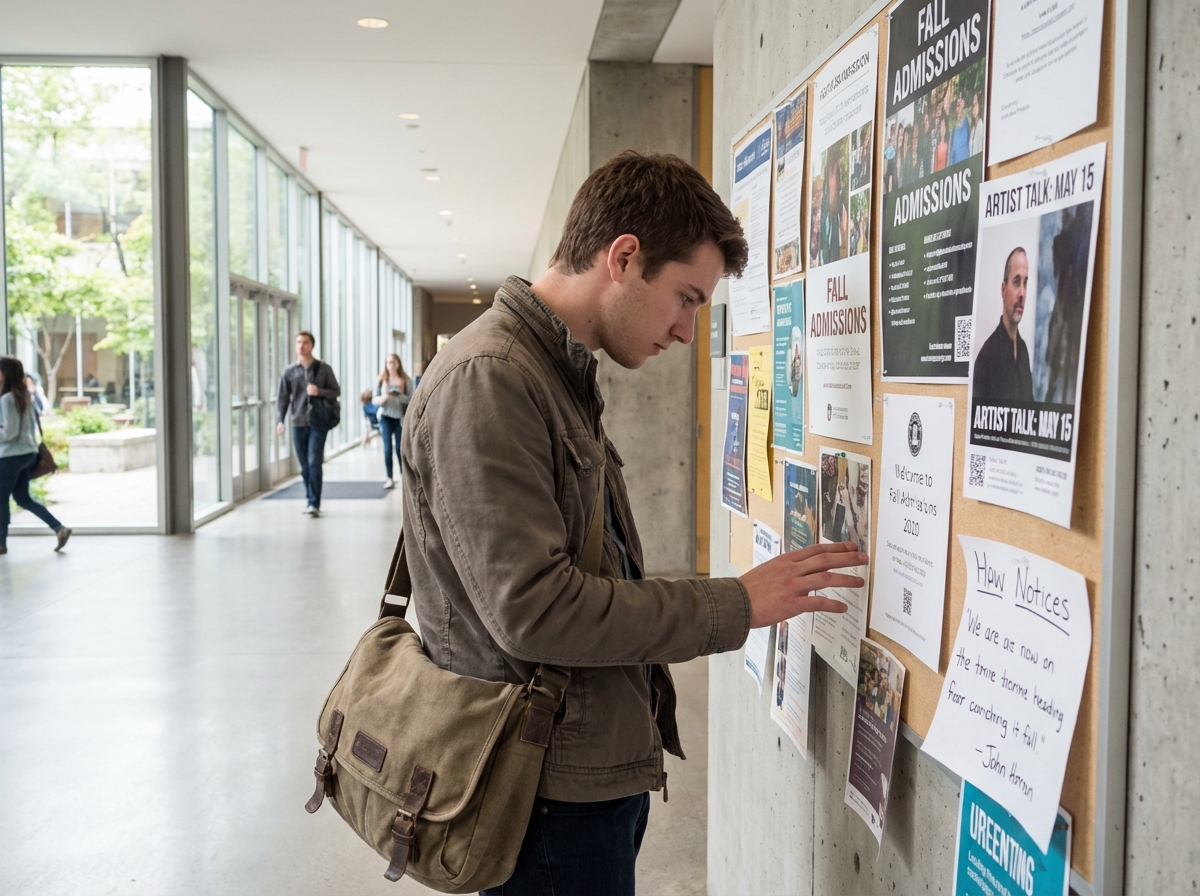
Succeeding in your interview: practical tips to highlight your journey and creativity
In front of the jury of an applied arts school, the presentation of the portfolio is not everything. One must know how to deploy the coherence between achievements, experiences, and professional project. What strikes a jury? A clear voice, without embellishments, a way of owning one’s choices and explaining why they make sense. When sincerity shines through in the discourse, it leaves a lasting impression.
Structuring the presentation of one’s artistic journey remains essential. This involves mentioning training, describing collective or personal projects, highlighting major influences, and connecting this background to the dynamics offered by the targeted school. A project completed with a group, an internship, or an associative experience often speaks louder than conventional speeches about autonomy.
The interview is not a lecture: it is an exchange. Do not hesitate to ask jury members about the specifics of the school, its workshops, its projects, its pedagogical scenarios. Showing interest in what is built within the walls of the school reveals commitment. Prepare to discuss your inspirations, your references, and how you see the evolution of plastic arts, design, or contemporary creation.
A true mastery of artistic vocabulary and the ability to give depth to one’s work are also expected. Do not hesitate to illustrate your points with an exhibition that marked you, a designer who enchanted or challenged your perspective. Juries like to gauge curiosity about current artistic events, knowledge of the French design scene, or reflections on the new challenges of creation. This blend of personal artistic culture and the ability to debate weighs heavily during the admission interview.
A voice, a project, a point of view worthy of interest: often, it is this detail, this unique tone, that leaves a memory and allows one to stand out.